How Small Wellness Teams Can Do More With Integrated Technology
July 15, 2026

You are likely running a wellness program that serves hundreds, or thousands, of people. You are probably doing it with a small team, a finite budget, and a long list of competing priorities. You are not alone.
This is one of the most consistent challenges in the wellness profession: the gap between what a program could do and what a small team can realistically execute. Program leaders are asked to improve outcomes, increase engagement, and meet diverse workforce needs, without additional staff or resources.
This article explores how integrated wellness technology can help close that gap: not by replacing human-centered practice, but by handling the administrative and operational work that drains capacity
The Capacity Problem Is Real
The CDC recommends that effective workplace health programs be coordinated, systematic, and comprehensive, addressing multiple risk factors while adapting to the organization's specific workforce and culture. That is a high bar for any team, and an especially demanding one for small wellness offices.
SHRM's toolkit on wellness program design notes that technology-based wellness tools offer key advantages including scalability, customization based on health assessment results, and the ability to reach employees across multiple sites and remote settings. These are not features that exist merely for convenience. For a small team, they are the difference between a program that reaches its population and one that serves only whoever is easiest to engage.
The CDC's guidance for smaller organizations is direct on this point: focus on a few well-chosen strategies rather than many poorly implemented ones, and use data to plan and evaluate. That discipline is easier to maintain when technology handles the tracking, triggering, and reporting that would otherwise require manual effort.
Where Technology Reduces Manual Lift
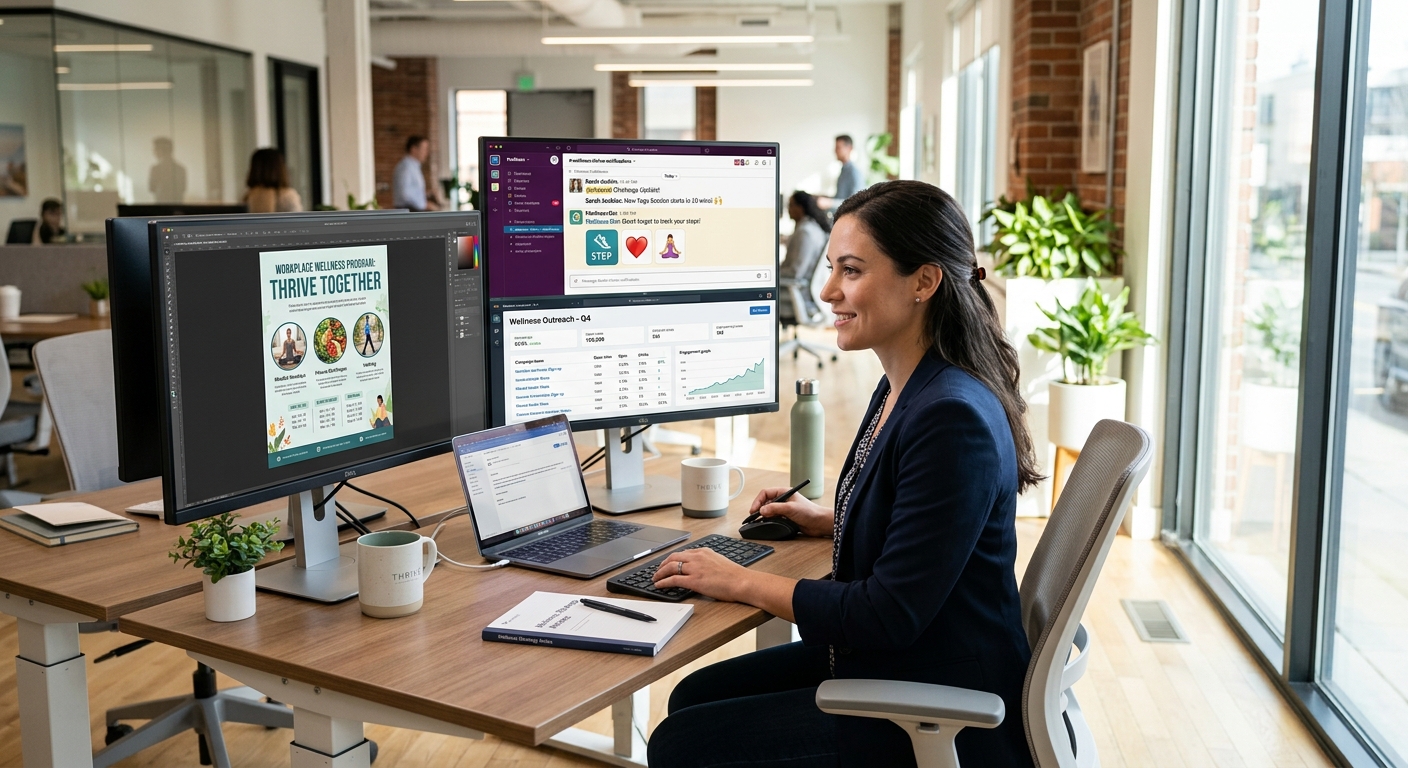
When wellness programs operate off spreadsheets and manual processes, administrative tasks consume time that should go toward program design, participant support, and stakeholder communication. Here is where integration changes the equation.
Health Risk Assessment Delivery and Follow-through
An automated HRA platform handles outreach, completion tracking, and follow-up without staff intervention for each individual participant. When the assessment is connected to the rest of the platform, results can automatically trigger relevant action plan recommendations — so a participant who indicates elevated stress risk is directed to a stress management program without a wellness coordinator having to manually review and assign.
Incentive Tracking and Fulfillment
Managing a points-based incentive program manually is one of the highest-burden administrative tasks in wellness management. Integrated platforms can configure program rules, track qualifying activity completions, and process redemptions automatically — reducing exception handling and freeing staff from reconciliation work. The CDC's Worksite Health Score Card identifies incentive design as one of the infrastructure elements that supports a culture of health.
Reporting and Data Access
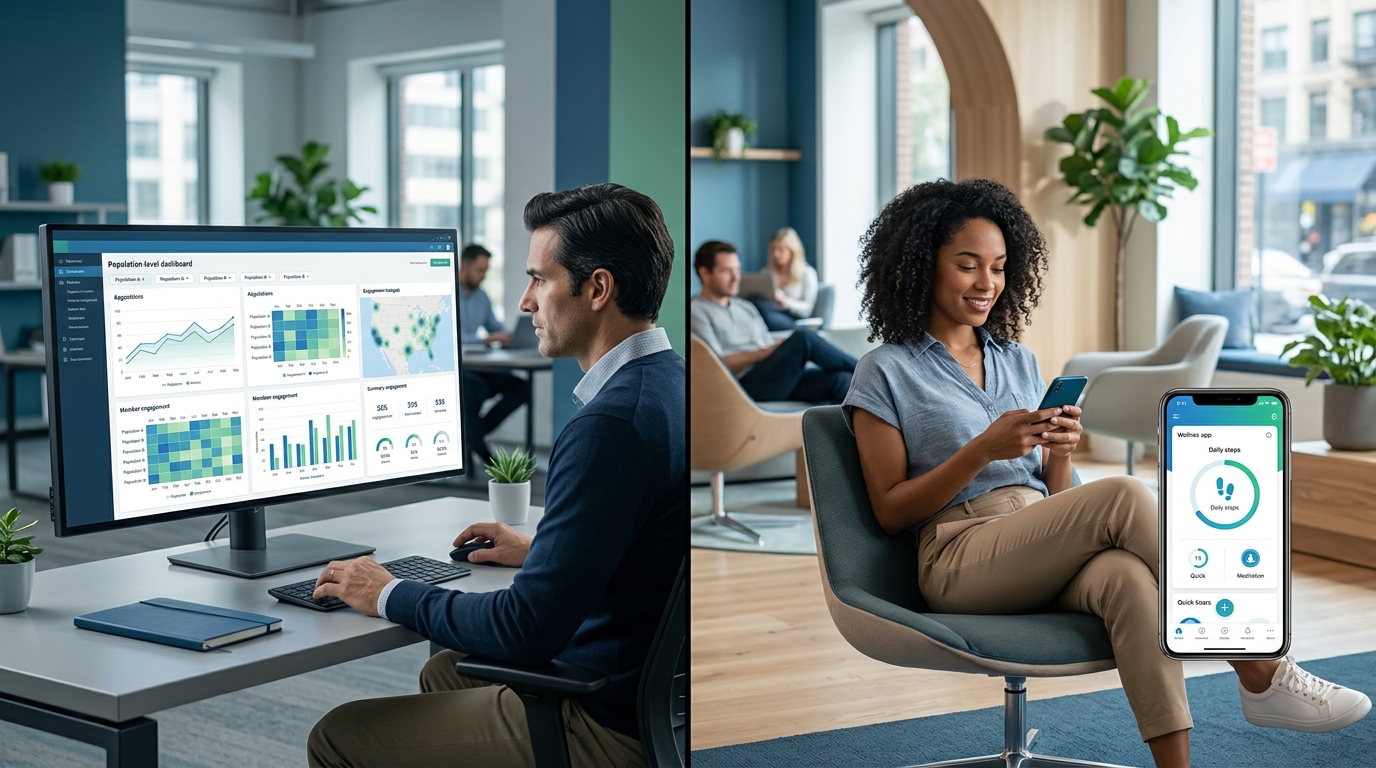
A small team that has to manually compile participation data before a quarterly review is spending time it cannot spare. Self-service reporting tools — where an administrator can pull participation rates, health risk trends, and incentive redemption patterns on demand — make it possible to stay current on program performance without a dedicated analyst.
Data Integration Across Systems
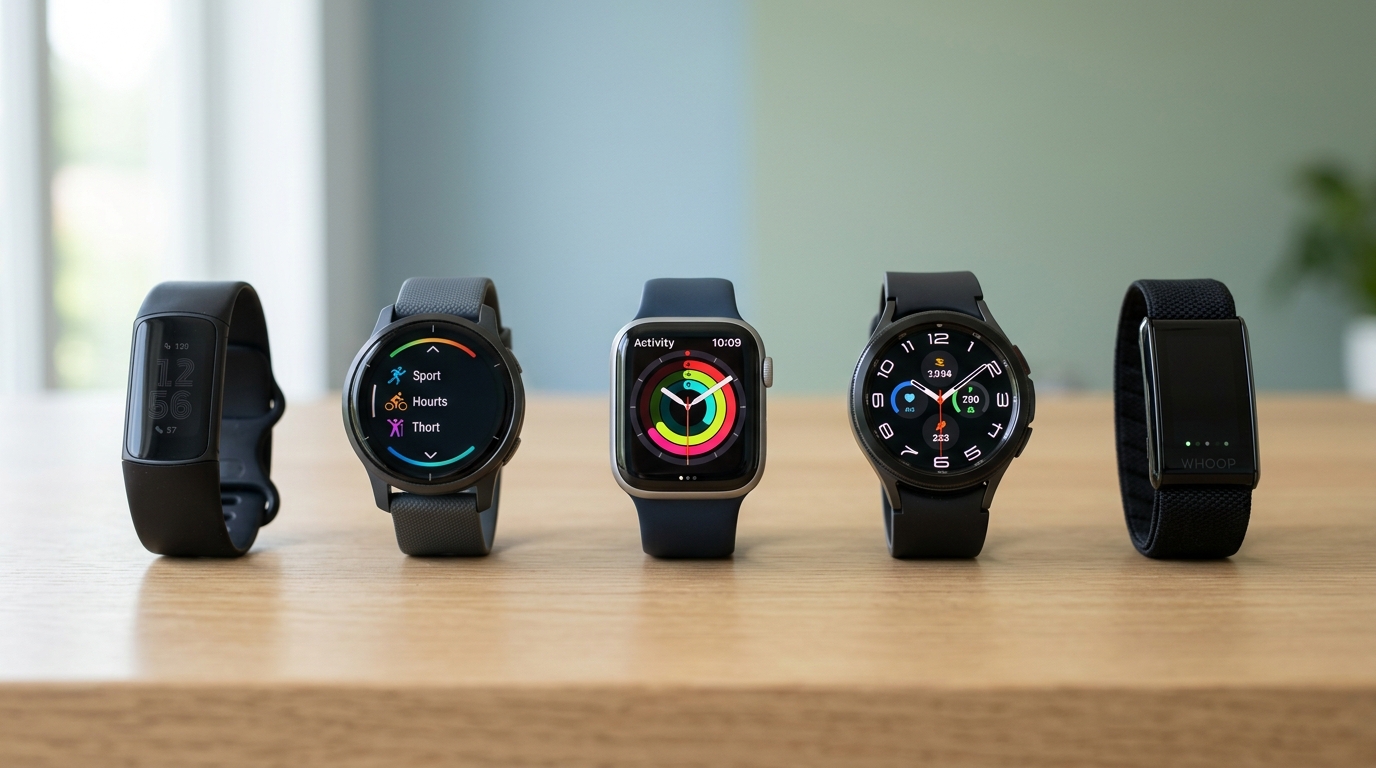
Many wellness programs draw data from multiple sources: eligibility files, biometric screening vendors, care management platforms, and sometimes wearables. When those sources feed into a single system automatically, staff are not manually reconciling files. That integration also makes it possible to identify population-level trends — which is precisely what data-informed programming requires.
Technology Supports the Human Work, It Does Not Replace It
Automation should protect the human capacity of your team, not a substitute for it. When routine tasks are handled by the platform, wellness professionals can spend more time on the things technology cannot do: building relationships with department leaders, responding thoughtfully to individual participant needs, and designing programs that reflect the actual culture and values of their organization.
The CDC frames this clearly in its guidance on workplace health promotion: the workplace is a key setting for health promotion because it is where people spend a large portion of their day. Reaching people in that setting takes both good tools and good human judgment. The goal of integrated technology is to make sure your team has enough capacity left to apply the latter.
Translating Health Risk Data Into Programming Priorities
One of the highest-value uses of an integrated platform is translating population health data into defensible programming decisions. When a wellness administrator can see, in one place, which health risk categories have the highest prevalence in their population and cross-reference that against current program participation, they can make more defensible decisions about where to invest limited resources. That is not a replacement for clinical judgment or stakeholder input, but it is a stronger foundation than intuition alone.
The CDC Worksite Health Score Card, a free self-assessment tool for employers, includes organizational support and data-driven evaluation as explicit elements of an effective workplace health program. Being data-informed is not optional for programs that need to demonstrate value to leadership: it is a prerequisite.
A Practical Starting Point
If your team is evaluating how technology can support your work, a few practical questions are worth asking:
- Which administrative tasks currently consume the most time without directly improving the participant experience?
- Is your HRA data connected to anything downstream, or does it sit in a separate system?
- Can you pull a participation report today without help from an IT or data team?
- Are your incentive tracking and fulfillment processes manual, and if so, what does that cost in staff hours?
The answers will help identify where the highest-leverage opportunities for integration are, and where a more connected platform could give your team meaningful capacity back.
Learn More
PDHI’s platform includes automated HRA delivery, triggered action plans, incentive management, self-service reporting, and data integration capabilities, designed to support wellness program teams of any size. Contact us to learn more!