Best Smartwatches for Workplace Wellness Challenges (2026)
September 17, 2026
When an employer or health plan launches a wellness challenge, the device employees use to participate matters more than most program administrators realize.
Not every smartwatch syncs reliably with wellness platforms. Not every device captures the health markers that matter for population-level reporting.
And not every wearable is accessible or comfortable for the full range of employees who need to participate.
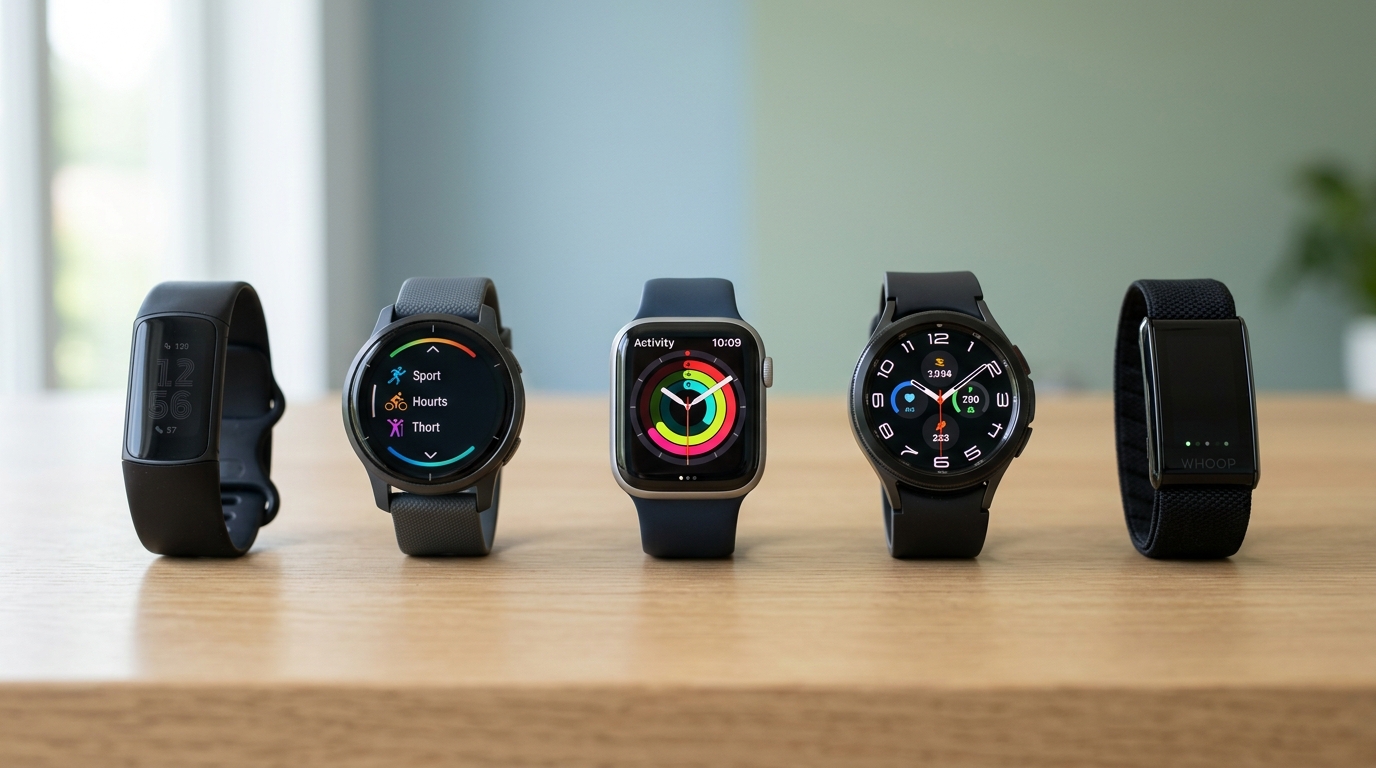
This guide evaluates the four most commonly used smartwatches for workplace wellness challenges in 2026 across the criteria that matter most for wellness program administrators.
What Wellness Program Administrators Should Look for in a Smartwatch
Most smartwatch reviews are written for individual consumers. But workplace wellness wearables serve a different purpose entirely.
Here is what employers, health plans, and wellness vendors should evaluate when selecting or recommending wearables for their programs:
- Challenge compatibility: Does the device sync step counts, active minutes, and activity data reliably with your wellness platform?
- Health sensor accuracy: Does it capture the biometric markers your program needs, heart rate, sleep, blood oxygen, stress indicators?
- Notification and engagement tools: Can it push wellness challenge reminders, goal alerts, and program notifications directly to the member's wrist?
- Employer dashboard integration: Does the device connect to your wellness platform's reporting system so administrators can track participation at the population level?
- Accessibility and price point: Is it realistic to expect your full employee or member population to own and use this device?
1. Apple Watch
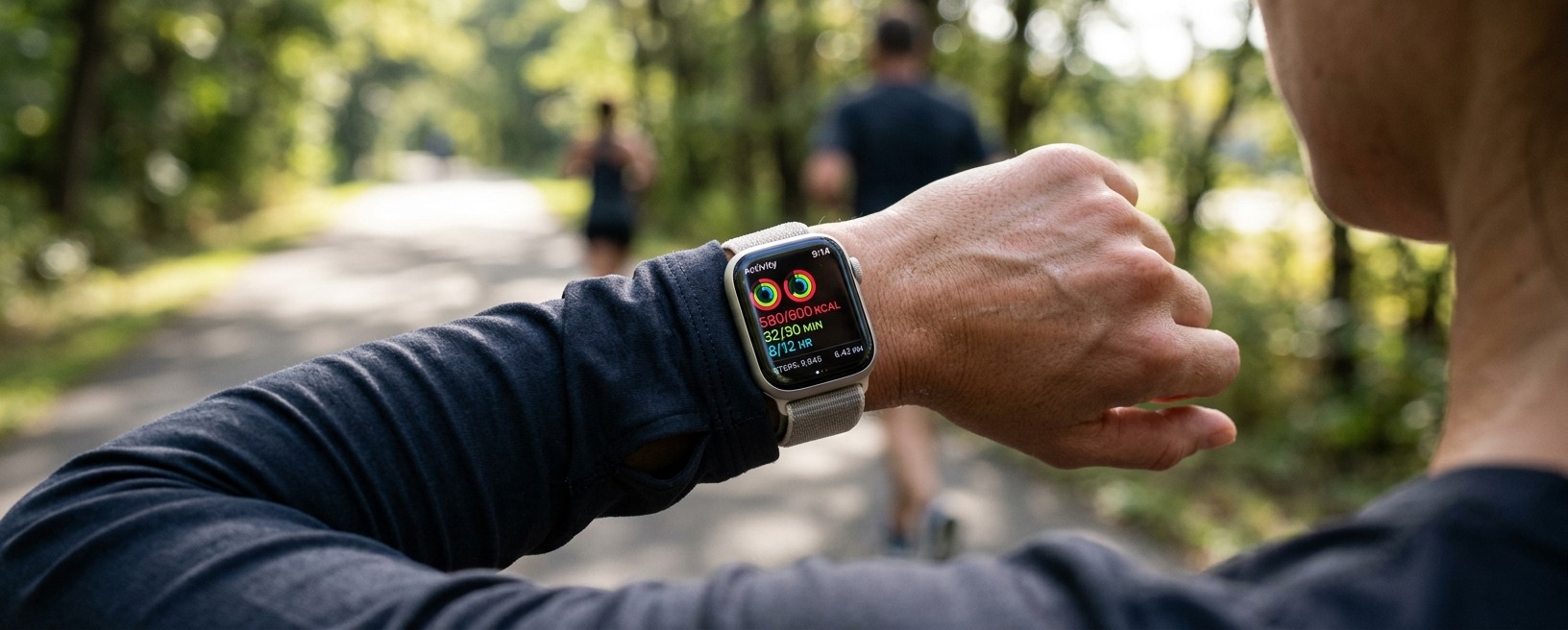
The most feature-rich option for wellness challenges, with the deepest health sensor suite and the strongest integration with health and wellness platforms.
Challenge Compatibility
Apple Watch syncs seamlessly with Apple Health, which serves as a data hub for most major wellness platforms.
Step counts, active calories, workout sessions, and stand hours all sync automatically, making it one of the most reliable devices for step challenges and activity-based wellness programs.
Health Sensors
Apple Watch leads the category on health sensor depth, offering heart rate monitoring, ECG, blood oxygen, sleep tracking, crash detection, and temperature sensing on newer models.
For wellness programs that incentivize biometric improvement or track cardiovascular health indicators, Apple Watch provides the most clinically meaningful data set of any consumer wearable.
Step Data Integration
With Apple Health integration, Apple Watch sends step counts and activity data straight to PDHI's Activity Tracking module.
This lets administrators track step-based challenge participation for all employees, and participants do not need to enter data themselves.
Considerations
Apple Watch is iPhone-only, a meaningful limitation for employers with Android-heavy workforces.
It is also the most expensive option on this list, which affects accessibility for hourly or lower-wage employee populations.
2. Samsung Galaxy Watch

The strongest Android-native option, with broad health sensor coverage and cross-platform wellness app compatibility.
Challenge Compatibility
Samsung Galaxy Watch syncs with Samsung Health and Google Fit, both of which connect to major wellness platforms for step and activity tracking.
Its cross-platform compatibility makes it a stronger choice than Apple Watch for mixed-device workforces.
Health Sensors
Galaxy Watch tracks heart rate, blood pressure, ECG, blood oxygen, sleep stages, and body composition on select models.
The body composition analysis feature, which estimates skeletal muscle mass, body fat percentage, and BMI, stands out for wellness programs focused on biometric improvement goals.
Step Data Integration
Samsung Health and Google Fit integrations connect Galaxy Watch step data to wellness platforms that support Android-native health data sources.
For programs running on platforms with broad device integration support, Galaxy Watch is a reliable and accessible option for Android users
Considerations
Samsung Health's third-party API access has historically been more restricted than Apple Health, which can create friction for wellness platform integrations, depending on the platform's device-support architecture.
3. Garmin Venu
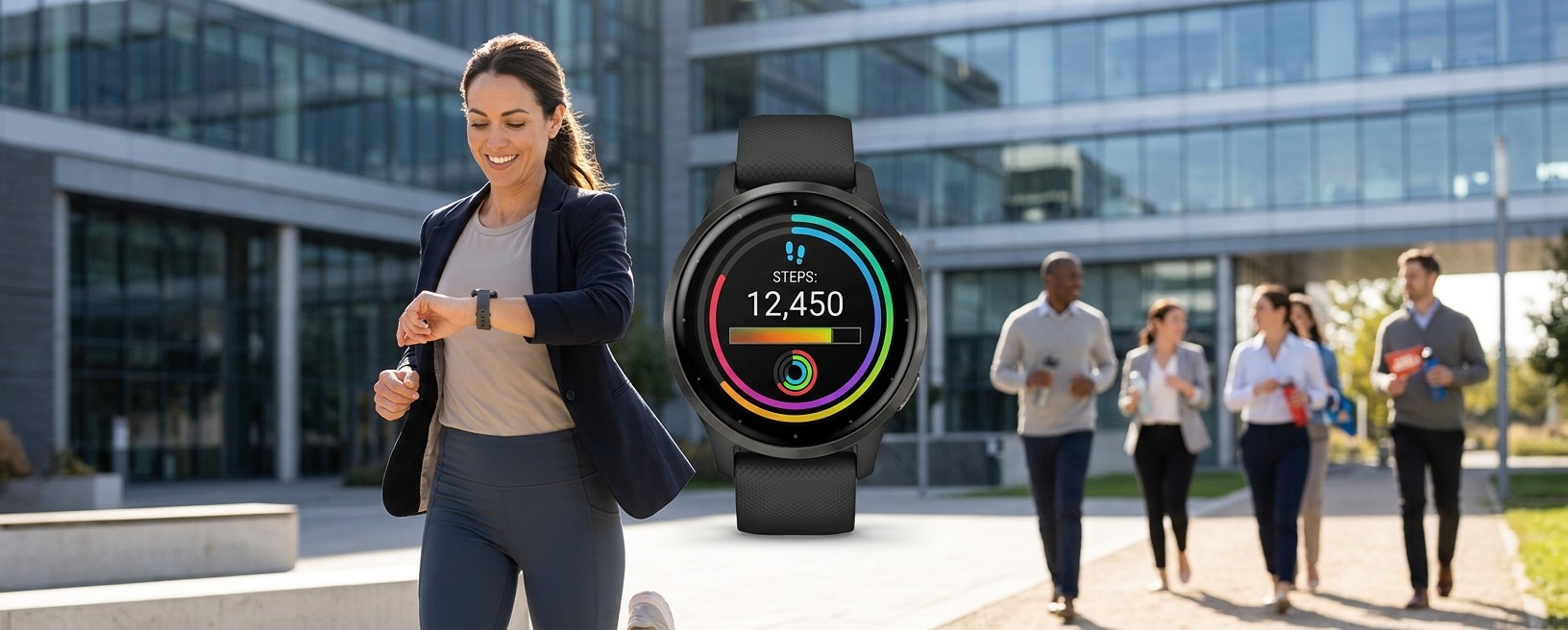
The most accurate step and activity tracker on this list, purpose-built for active users and wellness programs where movement data accuracy is critical.
Challenge Compatibility
Garmin is widely regarded as the gold standard for step and GPS-based activity tracking accuracy.
When step-count accuracy is important in wellness challenges, especially in competitive ones where some employees might try to cheat, Garmin’s motion sensors offer a real advantage.
Health Sensors
Garmin Venu tracks heart rate, blood oxygen, sleep, stress, hydration, respiration rate, and menstrual cycle health.
Its Body Battery feature, which measures energy levels based on activity, stress, and sleep data, provides a holistic picture of daily wellness that goes beyond simple step counts.
Step Data Integration
Garmin Connect syncs step and activity data with wellness platforms through the Garmin Health API, an enterprise-grade integration layer designed for corporate wellness programs.
For step-based wellness challenges where accuracy matters most, Garmin's motion sensor precision is one of the strongest available for population-level reporting in PDHI's platform.
Considerations
Garmin Venu has a smaller brand footprint than Apple or Samsung among general consumers, which can affect employee adoption rates if participation is voluntary rather than incentivized.
4. Fitbit Versa
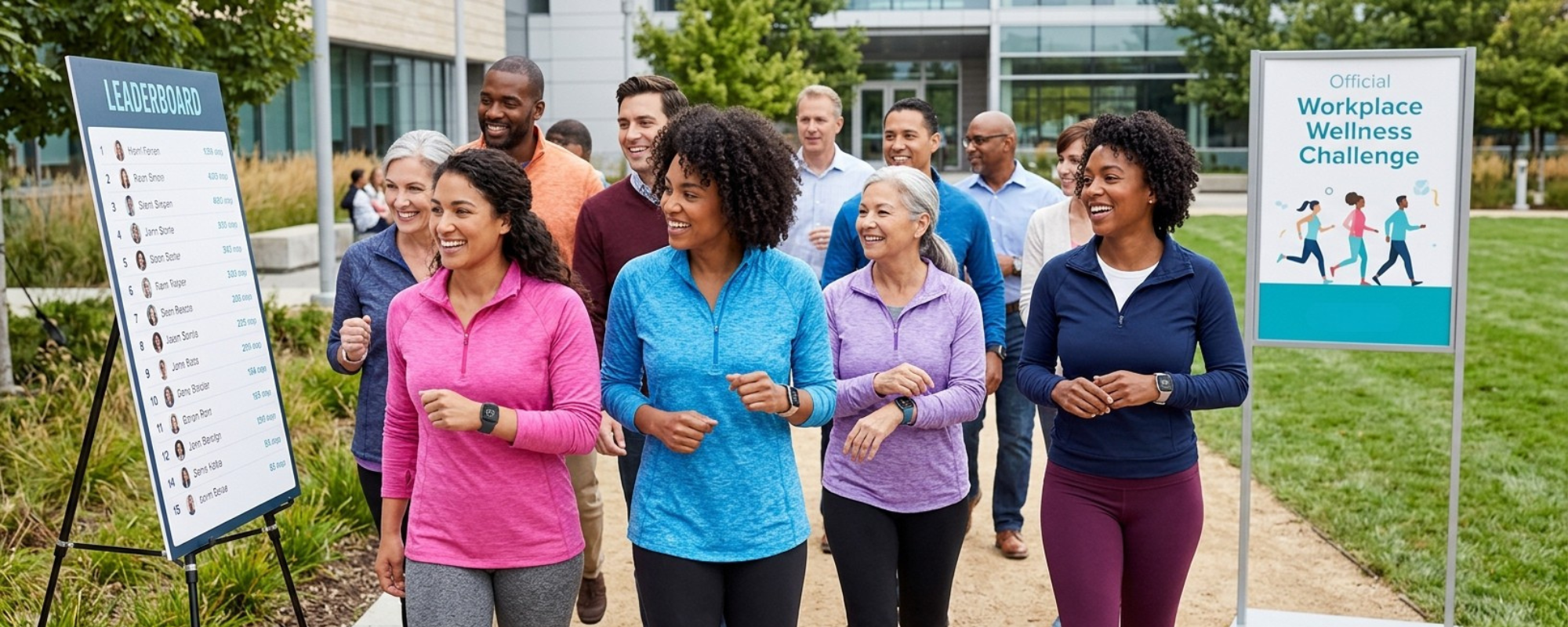
The most accessible and user-friendly option, with strong wellness platform compatibility and a lower price point that supports broader employee adoption.
Challenge Compatibility
Fitbit Versa remains the most widely adopted fitness tracker wellness challenge device in the corporate market.
Its step tracking, active minutes, and sleep data sync reliably with Google Fit and directly with many wellness platforms through Fitbit's developer API.
For employers running their first wearable-integrated wellness challenge, Fitbit Versa is the lowest-friction starting point.
Health Sensors
Fitbit Versa tracks heart rate, blood oxygen, sleep stages, stress management scores, and active zone minutes.
Its sensor suite is not as extensive as what you find on the Apple Watch or Garmin, but it tracks the main health markers that most wellness programs require.
The information is also presented in a way that is clear and easy for people new to wearables to follow.
Step Data Integration
Fitbit sends step count and activity data straight to PDHI's Device Integrations module, just like Apple Health, Google Fit, and Garmin.
This lets administrators combine step-based participation data from different devices, so there is no need to use only one device brand.
Considerations
Since Google acquired Fitbit, some enterprise API access has changed.
Wellness platform developers should check with their platform provider to make sure Fitbit is still supported before recommending it as a main device.
How PDHI Supports Multi-Device Wellness Challenges
A common mistake wellness program administrators make is building a step challenge around just one device, which can lead to losing employees who use something else.
The best workplace wellness challenges are device-agnostic, rewarding step data whether it comes from an Apple Watch, Samsung Galaxy Watch, Garmin, Fitbit, or even a manual log.
PDHI's Device Integrations module brings together step and activity data from Apple Health, Google Fit, Fitbit, Garmin, and other major health sources into one wellness platform.
This way, step challenge participation from employees using different devices goes straight into Challenges + Events, incentive programs, and population health reports.
For health plans and employers with large, diverse groups, this device-agnostic setup makes step-based wellness challenges easy to scale and more inclusive.
Conclusion
For wellness program administrators, the best smartwatch is not always the one with the most features.
It is the one your employees will actually wear and that your wellness platform can easily connect to.
Apple Watch offers the most detailed health data. Samsung Galaxy Watch works best for teams that mostly use Android.
Garmin Venu is the most accurate for activity tracking in competitive challenges. Fitbit Versa is the easiest option for first-time wearable users and for getting more people involved.
The most successful programs build infrastructure that supports all employee wellness tracking devices equally.
Ready to see how PDHI's device integrations support workplace wellness challenges across any wearable?
Request a demo and explore the full platform.
Frequently Asked Questions
These are the questions wellness program administrators ask most often when choosing smartwatches for workplace wellness challenges.
1. Which smartwatch is best for corporate wellness challenges?
For most programs, Fitbit Versa is the most practical starting point because it works with the most platforms, costs less, and is easy for beginners.
Apple Watch offers the most detailed health data for iPhone users. Samsung Galaxy Watch is the best choice for Android users. Garmin Venu is the most accurate for step challenges.
2. Do all smartwatches integrate with wellness platforms?
No. The four most widely supported devices are Apple Watch (using Apple Health), Samsung Galaxy Watch (using Google Fit and Samsung Health), Garmin (using the Garmin Health API), and Fitbit (using the Fitbit API and Google Fit).
Always check with your platform provider to make sure your devices are compatible before starting a challenge that uses wearables.
3. Can employees use different smartwatches in the same wellness challenge?
Yes, and the best programs are designed for this. Platforms that work with Apple Health, Google Fit, Garmin Connect, and Fitbit at the same time can bring together data from different devices into one dashboard.
This way, every employee can take part equally, no matter which device they use.
4. What step and activity data do wellness platforms typically collect from smartwatches?
Most wellness platforms collect step counts, active minutes, and workout session logs from connected smartwatches. These features are available on almost all major devices.
More advanced health metrics, such as heart rate, sleep, and blood oxygen, are recorded by the devices for personal use but usually are not included in workplace wellness platform dashboards.