How to Build a Wellness Incentive Program That Actually Drives Participation
July 24, 2026

Most organizations know that incentives work.
The research is consistent: when participation in a health assessment, screening, or wellness challenge is tied to a meaningful reward, people are significantly more likely to show up, complete the program, and come back for more.
But knowing that incentives work and knowing how to build a wellness incentive program that sustains participation over time are two very different things.
Here is what actually makes the difference.
Why Most Wellness Incentive Programs Underperform
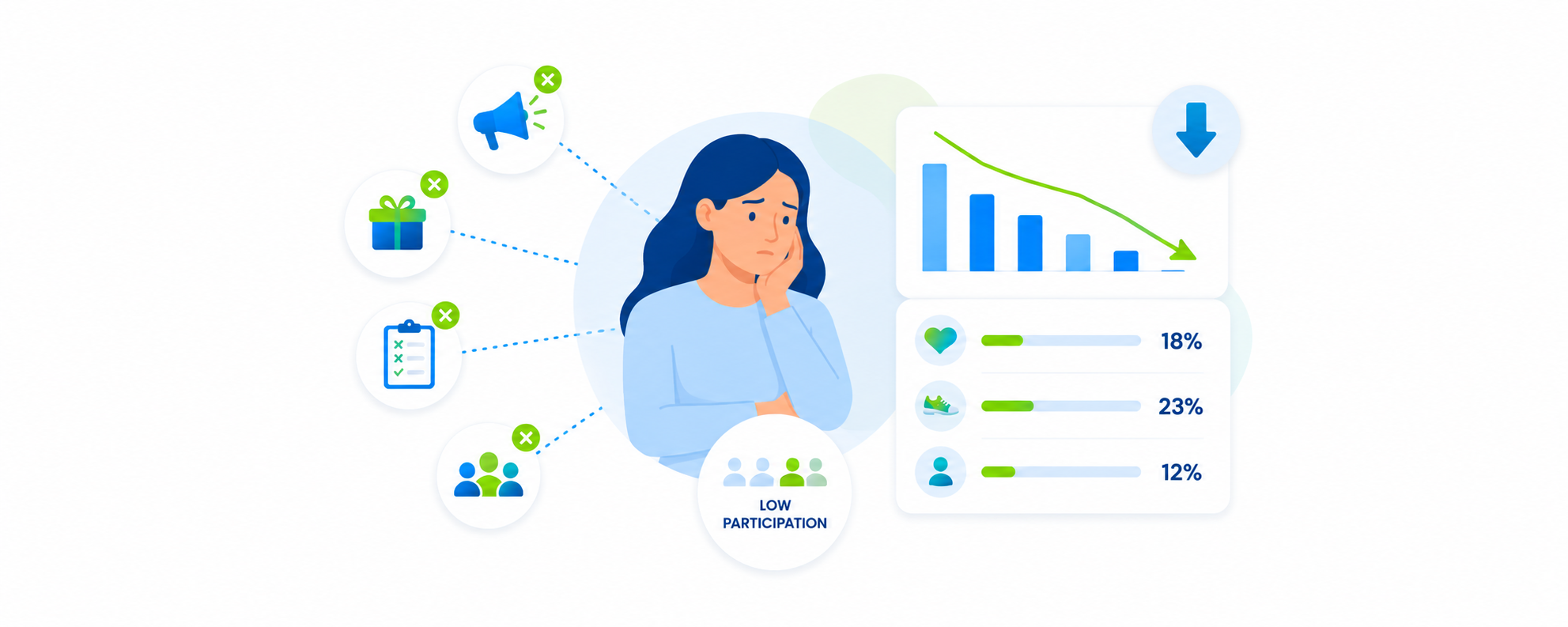
The most common reason wellness incentive programs fail is not the rewards themselves; it is the design.
Programs that reward the wrong actions, offer rewards that feel disconnected from effort, or make redemption so complicated that members give up before they get there consistently underperform regardless of the budget behind them.
- Rewards that feel too small relative to the effort required
- Generic program design that does not reflect the member's actual health needs
- Single-channel delivery that misses large portions of the population
- No clear connection between the reward and a meaningful health action
- Poor tracking and redemption processes that create friction at the finish line
The Foundations of Effective Wellness Incentives Management
Building a wellness incentive program that actually drives participation starts with getting four things right: the right actions, the right rewards, the right delivery, and the right tracking.
Here is how each one works.
1. Reward The Right Actions
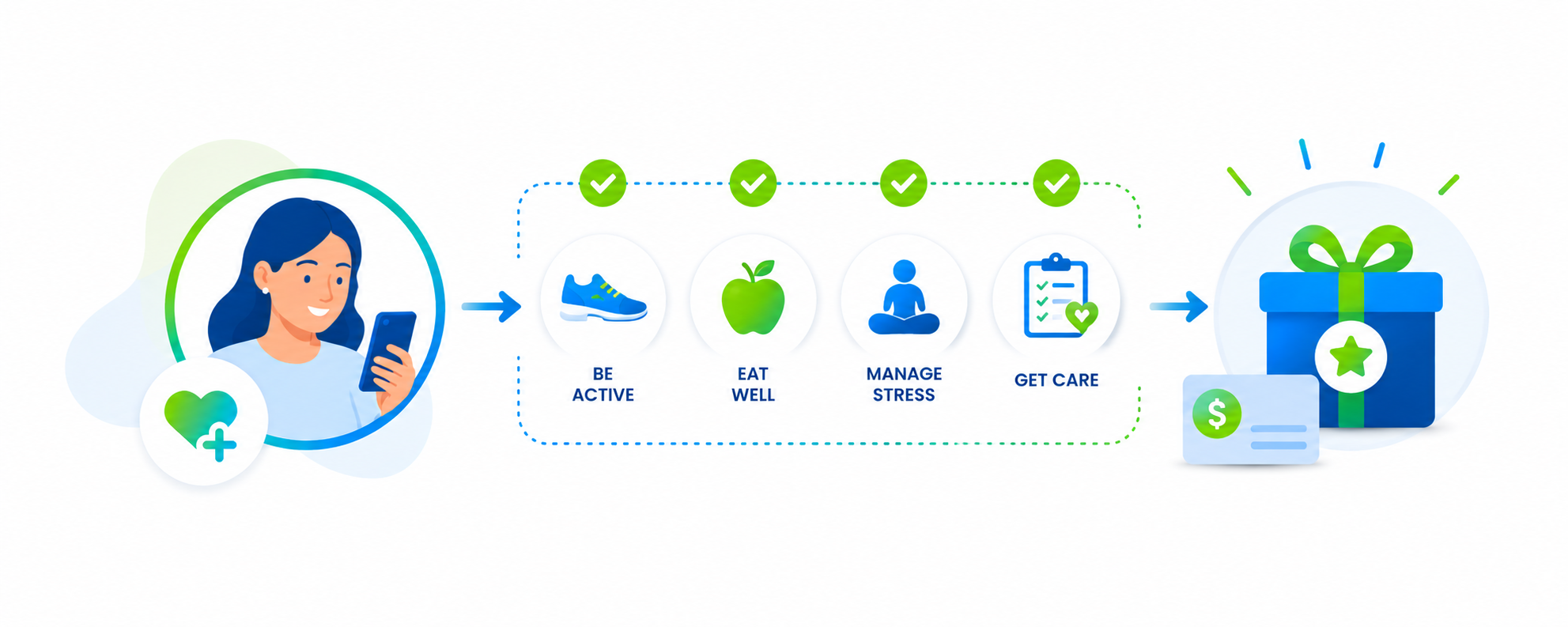
The most effective employee incentive programs connect rewards to actions that have real clinical value, such as completing a health assessment, attending a biometric screening, joining a health coaching session, or closing a care gap.
These are the actions most likely to improve health outcomes and generate the data health plans need, and employers need to improve their programs over time.
The key is specificity. A program that rewards "being healthy" is impossible to measure and easy to ignore.
A program that rewards "completing your annual health assessment by March 31" gives members a clear, actionable target with a defined deadline.
2. Match The Reward to The Effort
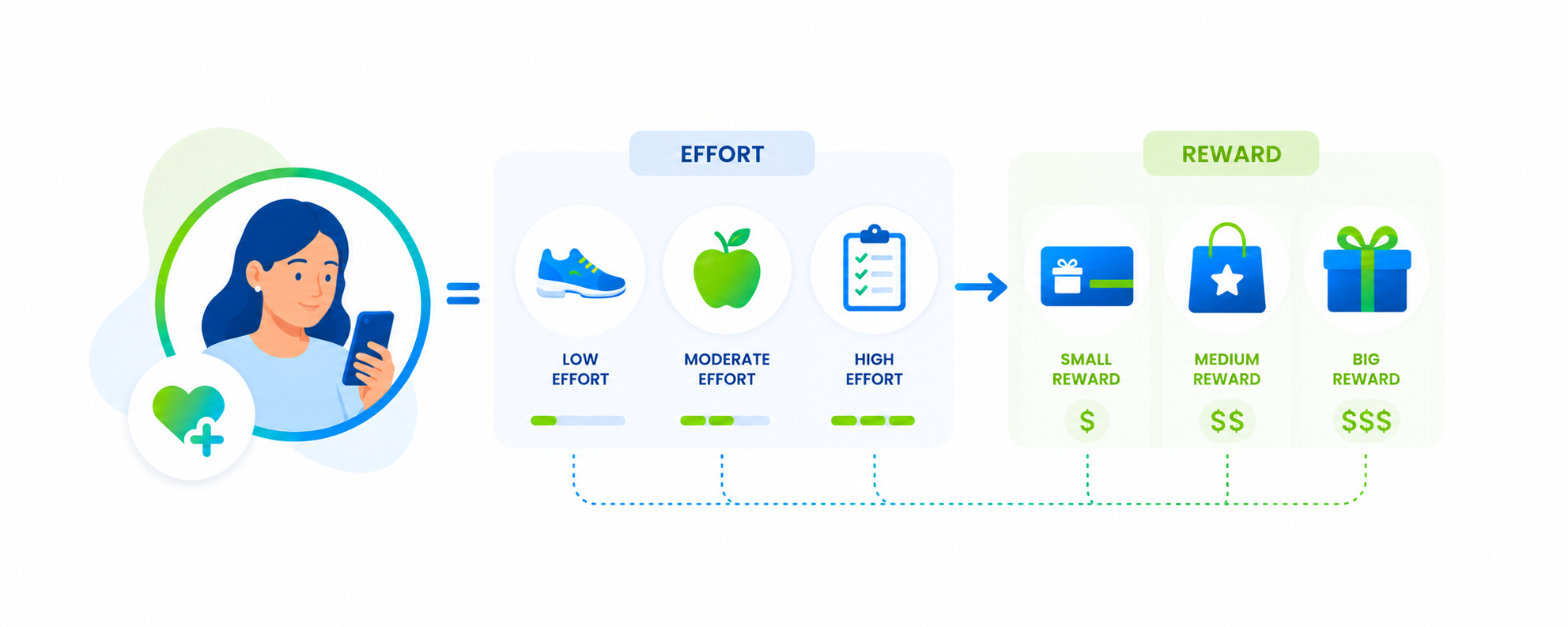
A reward that feels too small relative to the effort required will not motivate action, and a reward that feels too generous relative to a simple task can feel patronizing or create gaming behaviors.
The most effective approach is tiered incentives, smaller rewards for lower-effort actions like logging a health assessment, and larger rewards for higher-effort commitments like completing a multi-week wellness challenge or achieving a biometric goal.
This keeps members engaged across the full program journey rather than dropping off after the first step.
3. Deliver Through Multiple Channels
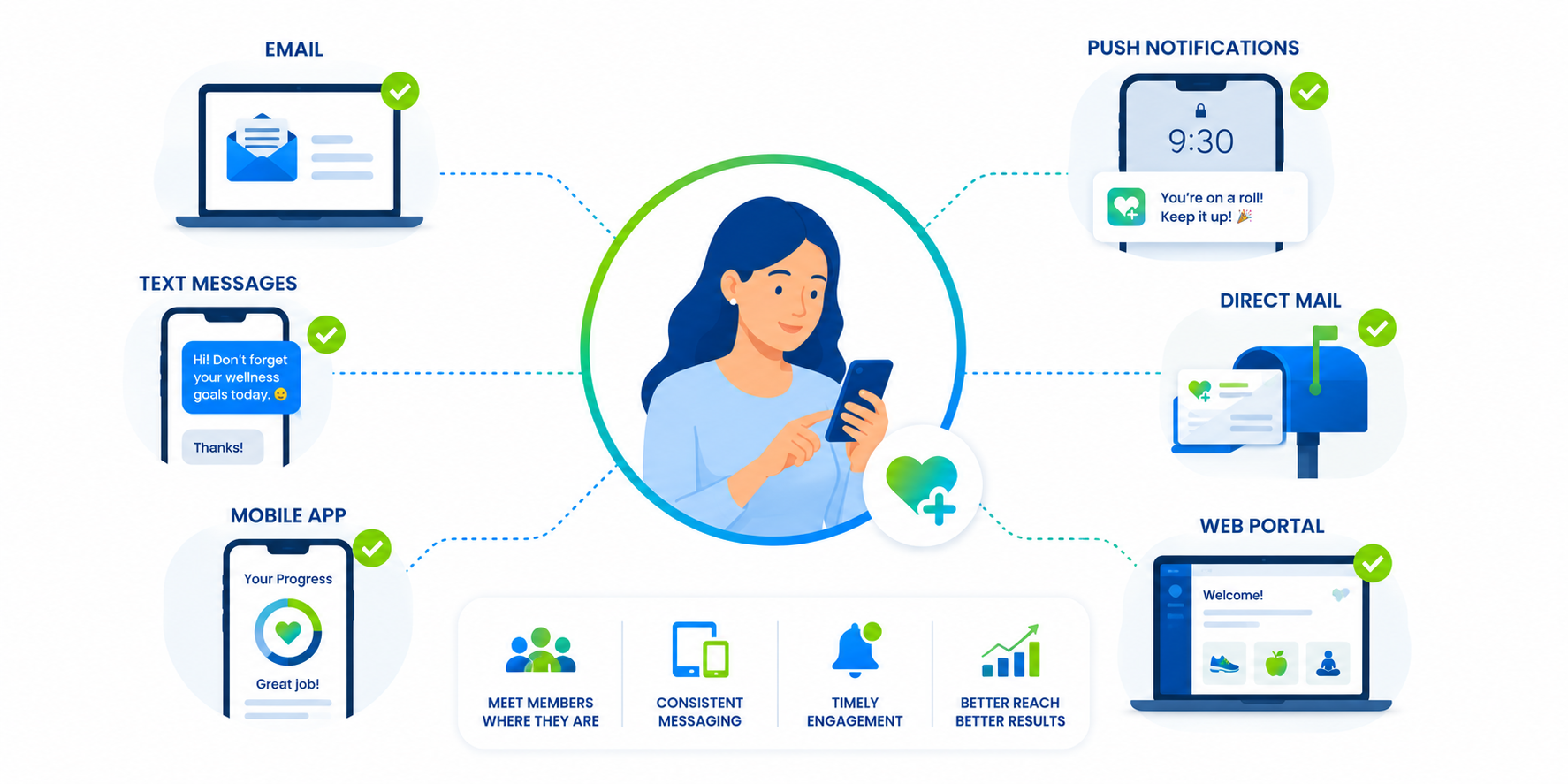
Incentives for employees and members only work if people know about them.
Multi-channel communication, combining email, SMS, phone, and in-app notifications, dramatically increases awareness and completion rates compared to single-channel outreach.
For Medicare Advantage and dual-eligible populations, phone and paper-based communication is not optional; it is essential.
4. Make Redemption Effortless
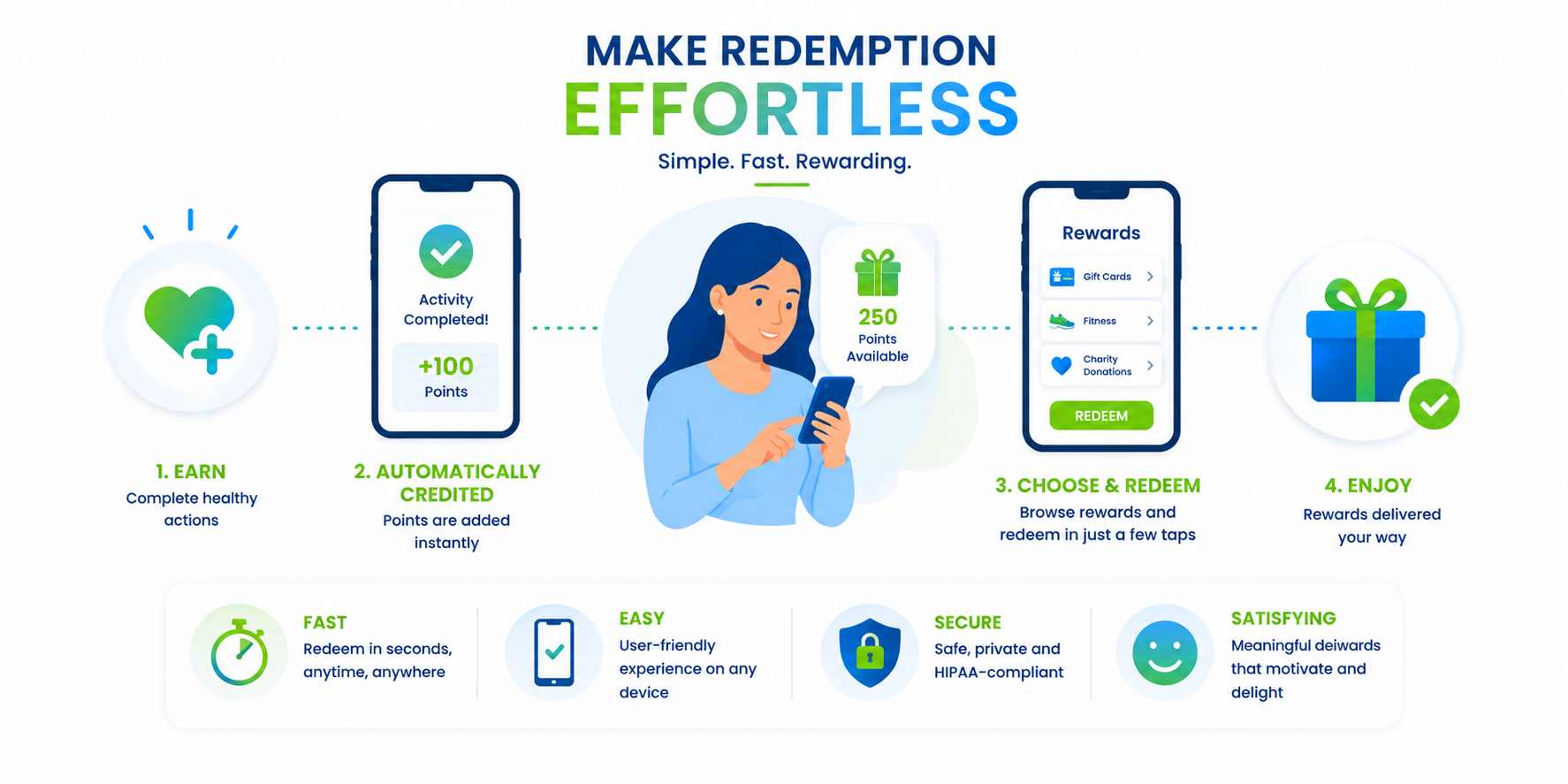
The redemption experience is where many wellness incentive programs lose members who were otherwise ready to engage.
If claiming a reward requires navigating a confusing portal, waiting weeks for fulfillment, or contacting customer support, members disengage, and they are unlikely to participate in the next program cycle.
The best incentive management software handles tracking and fulfillment automatically, giving members real-time visibility into what they have earned, what they can redeem, and what actions are still available to them.
What Good Wellness Incentives Management Looks Like in Practice
Effective wellness incentives management is not just about setting up a rewards catalog.
It is about connecting incentive data to health data, configuring earning rules by population or line of business, automating fulfillment, and reporting on what is working, all from a single system.
PDHI's incentive management platform gives health plans, employers, and wellness vendors the tools to do exactly that.
From configurable earning rules tied to actions like completing Managed Health Assessments or enrolling in health coaching, to automated fulfillment and real-time reporting dashboards, PDHI makes it possible to run sophisticated employee wellness incentive programs across diverse populations without adding administrative complexity.
Final thoughts
A wellness incentive program that actually drives participation is not the one with the biggest budget; it is the one with the most thoughtful design.
The right actions, the right rewards, seamless delivery, and effortless redemption are what separate programs that move the needle from programs that collect dust.
For health plans, employers, and wellness vendors looking to build or improve their wellness incentives management strategy, PDHI offers the infrastructure to do it at scale with the compliance standards, configurability, and reporting depth that complex populations require.
Ready to build a wellness incentive program that actually works? Request a demo and see how PDHI can help.
Frequently asked questions
Here are the most common questions health plans, employers, and wellness vendors ask when designing and managing a wellness incentive program that drives real participation.
1. What is wellness incentives management?
Wellness incentives management is the structured design, administration, and tracking of programs that reward members or employees for completing specific health actions, such as health assessments, biometric screenings, or wellness challenges.
Effective wellness incentives management connects reward programs to health data, automates fulfillment, and provides real-time reporting on participation and outcomes.
2. What types of rewards work best in wellness incentive programs?
The most effective rewards are meaningful, proportionate to the effort required, and easy to redeem.
Common options include gift cards, reduced insurance premiums, points-based reward catalogs, and contributions to health savings accounts.
Tiered reward structures, where higher-effort actions earn larger rewards, tend to sustain engagement better than flat reward programs.
3. How do you measure the success of a wellness incentive program?
The most important metrics for wellness incentive programs are participation rates, completion rates, redemption rates, and health outcome improvements over time.
Programs that connect incentive data to health assessment results and claims data can also track downstream impacts like care gap closure rates and HEDIS performance improvements.
4. How can incentive programs be customized for different populations?
The most effective incentive plan management approaches allow organizations to configure earning rules, reward types, program caps, and redemption options by group, population segment, or line of business.
This is especially important for health plans managing Medicare Advantage, Medicaid, and Commercial populations simultaneously, each of which may respond differently to the same incentive structure.