What Makes a Wellness Dashboard Useful for Employers and Health Plans?
August 13, 2026

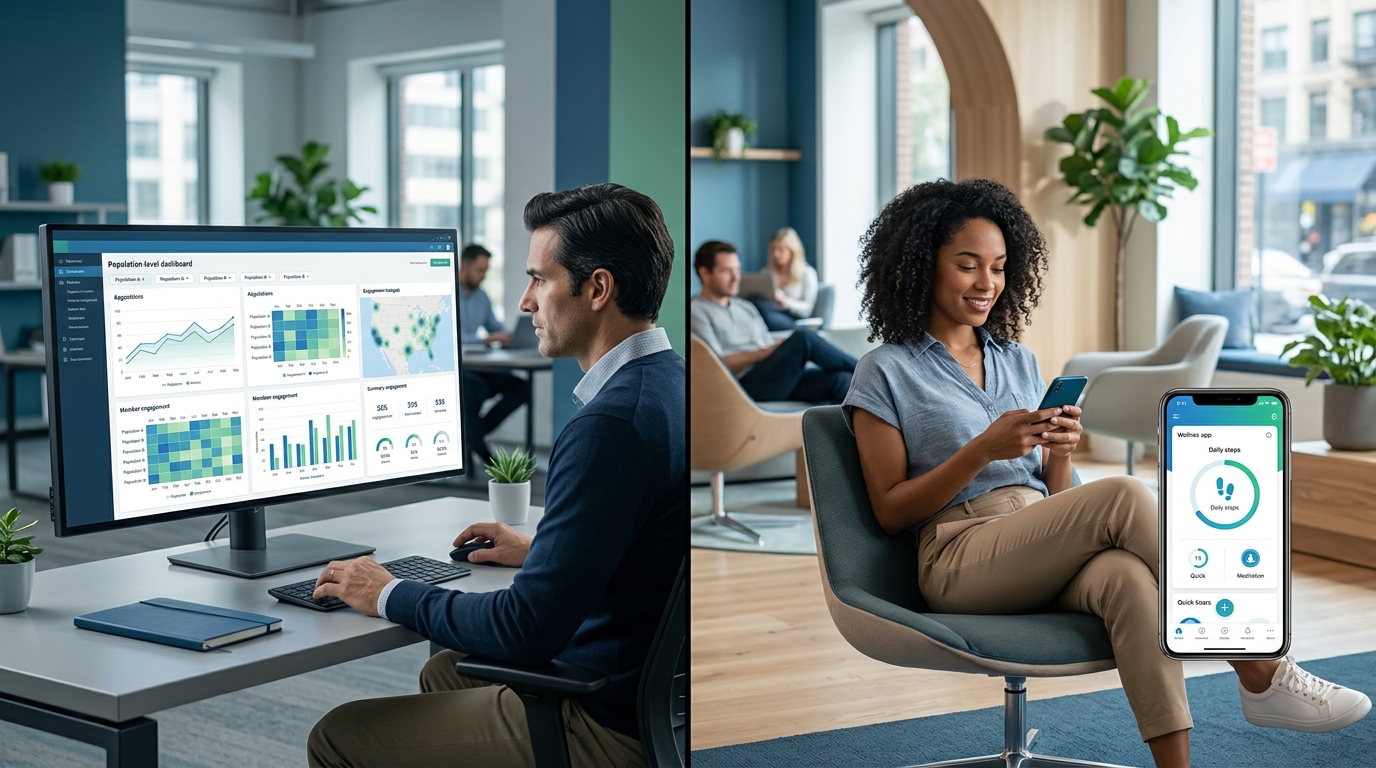
A wellness dashboard is only as valuable as what an administrator can do with the data it surfaces.
Too many platforms offer reporting tools that show participation counts and completion rates, but stop short of giving program managers the actionable insights they need to improve outcomes, close care gaps, or adjust their strategy in real time.
For employers and health plans managing large, diverse populations, the difference between a useful wellness dashboard and a decorative one often comes down to a few specific capabilities.
Here is what to look for.
What Is a Wellness Dashboard?
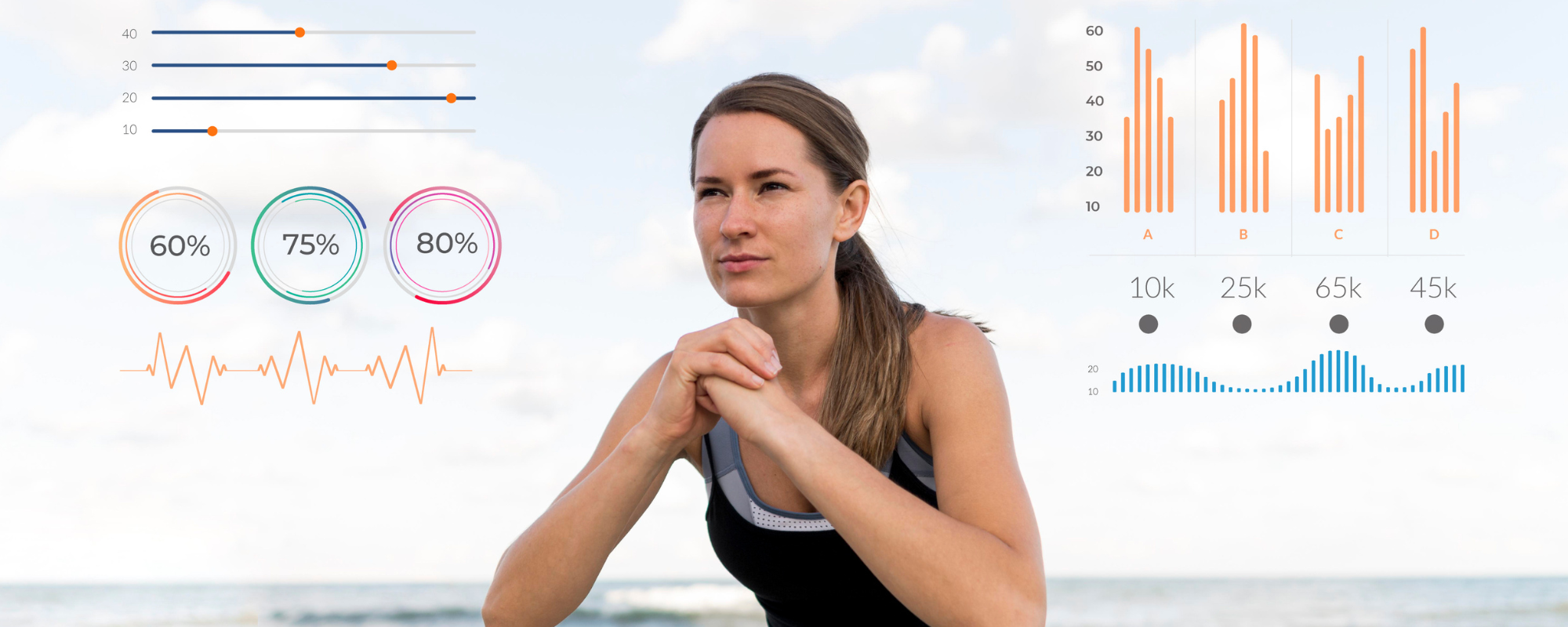
A wellness dashboard is a real-time reporting interface that gives program administrators visibility into the health and engagement data generated by their wellness programs.
The best employee wellness dashboards go beyond surface-level metrics, connecting participation data, health assessment results, incentive activity, and care gap information into a single view that enables data-driven decision-making across the population.
What Employers Need from a Wellness Dashboard
For employers, a wellness dashboard needs to answer a few core questions quickly:
- Who is participating? Who is not?
- What programs are driving the most engagement?
- Where are the biggest health risks concentrated across the workforce?
Real-Time Participation Tracking
Employers need to see program enrollment and completion rates in real time, not in a monthly report that arrives weeks after the data was collected.
An employee wellness dashboard that updates in real time allows program managers to identify drop-off points, flag low-participation groups, and adjust outreach before an entire program cycle is lost.
Risk Stratification by Group or Population Segment
The most useful wellness dashboards allow employers to segment participation and health data by department, location, age group, or line of business, making it possible to identify where health risks are concentrated and where programs are underperforming.
Generic aggregate data does not drive action. Population-level segmentation does.
Incentive and Rewards Tracking
For employers running incentive programs, the wellness dashboard should provide clear visibility into which actions are earning rewards, which members have redeemed, and where gaps in the incentive program are creating friction.
Wellness data analytics that connect participation to incentive performance give HR teams the evidence they need to optimize reward structures over time.
What Health Plans Need from a Wellness Dashboard
Health plans have different reporting needs than employers.
Beyond participation rates, health plan administrators need wellness program reporting that connects member engagement to clinical outcomes, care gap closure, and quality improvement metrics.
Care gap visibility
A population health dashboard built for health plans should surface which members have open care gaps, preventive screenings not completed, health assessments not returned, or follow-up actions not taken, and flag them for targeted outreach.
The ability to identify and act on care gaps in real time is one of the most valuable capabilities a health plan reporting dashboard can offer.
HEDIS and Quality Measure Tracking
For health plans subject to HEDIS reporting and CMS requirements, the wellness dashboard should connect program participation data to quality measure performance.
Understanding how wellness program engagement correlates with HEDIS scores gives health plan administrators a direct line of sight between their wellness investment and their quality outcomes.
Multi-Population Reporting
Health plans managing Medicare Advantage, D-SNP, Medicaid, and Commercial lines need dashboards that can report across all populations simultaneously while also allowing drill-down by line of business.
A dashboard that only aggregates across the full book of business obscures the population-specific insights that drive better program design.
What PDHI's Wellness Dashboard Delivers
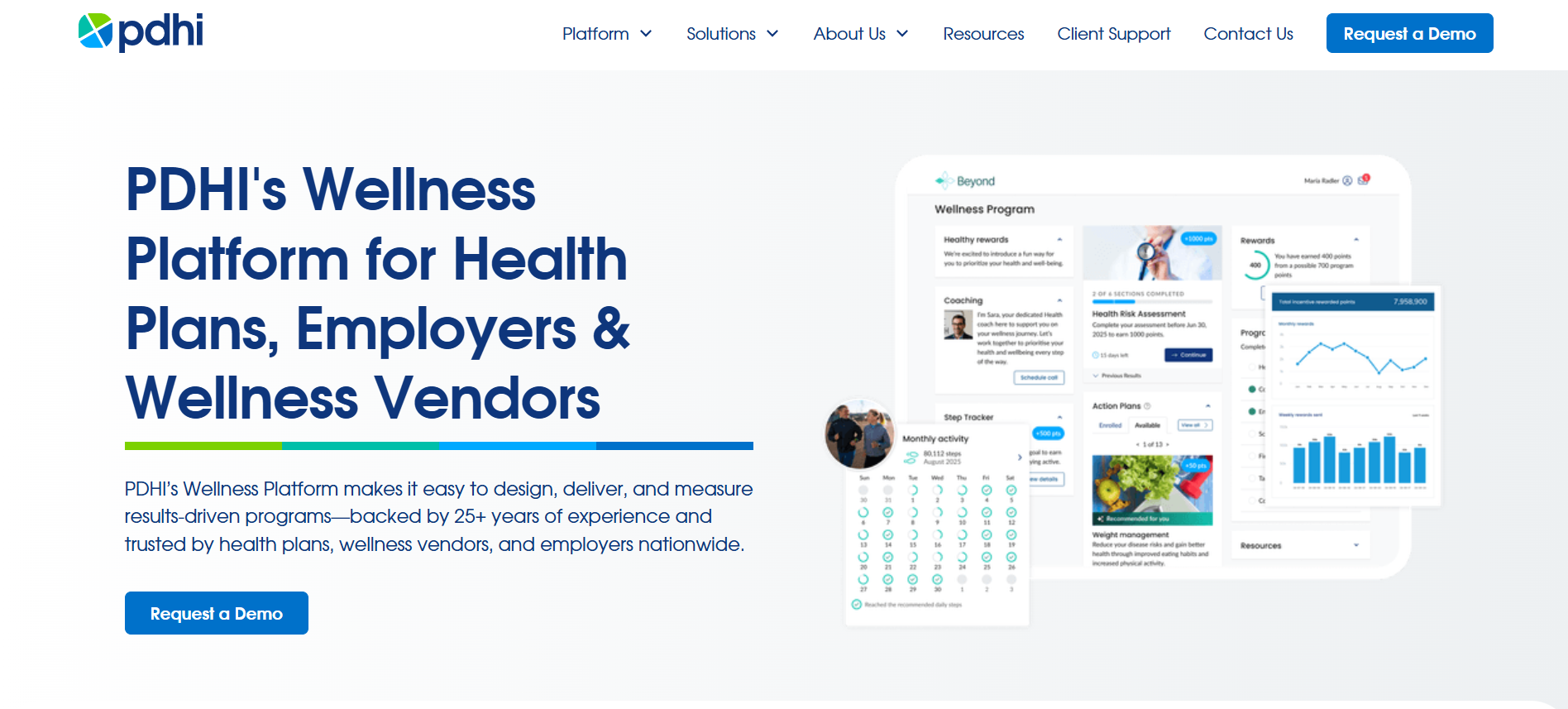
PDHI's wellness dashboard gives health plans, employers, and wellness vendors real-time visibility into program performance across their entire population.
With 55+ self-service reports and configurable dashboards, administrators can track participation, monitor health assessment completion, view incentive activity, and identify care gaps, all from a single interface.
For health plans managing diverse populations, PDHI's wellness data analytics connect member engagement data to quality improvement goals, giving program managers the evidence they need to act, adjust, and improve outcomes at scale.
Final Thoughts
A wellness dashboard is only as useful as the decisions it enables. For employers, that means real-time visibility into participation, risk, and incentive performance.
For health plans, it means connecting member engagement to care gap closure, quality measures, and population health outcomes.
The organizations that get the most value from their wellness programs are not the ones with the most data; they are the ones with the right tools to turn that data into action.
Ready to see what a real-time wellness dashboard can do for your population?
Request a demo and explore how PDHI's reporting tools drive better outcomes.
Frequently Asked Questions
1. What is a wellness dashboard?
A wellness dashboard is a real-time reporting interface that gives program administrators visibility into participation rates, health assessment completion, incentive activity, and population health data.
The best wellness dashboards connect multiple data sources into a single view that enables data-driven program management.
2. What data should a wellness dashboard show?
A useful employee wellness dashboard should show real-time participation rates, health assessment completion, incentive and rewards activity, care gap status, risk stratification by population segment, and program performance trends over time.
Aggregate data alone is not enough; the most useful dashboards allow drill-down by group, line of business, or population segment.
3. How is a wellness dashboard different for health plans vs. employers?
Employers primarily use wellness dashboards to track workforce participation, incentive performance, and health risk by department or location.
Health plans need dashboards that connect member engagement to care gap closure, HEDIS quality measures, and population health outcomes, with the ability to report separately across Medicare Advantage, Medicaid, and Commercial lines.
4. How many reports does PDHI's wellness dashboard offer?
PDHI's wellness dashboard offers over 55 self-service and scheduled reports.
These cover participation, health assessment completion, incentive activity, care gap status, and population health trends.
Administrators get the detailed reporting they need to manage programs at scale, without having to rely on custom data exports.